
Zynap: Turning Security Noise to Action.
Security teams aren’t short on data. SIEM alerts, endpoint detections, and threat intelligence feeds constantly generate new signals. The challenge isn’t collecting this information, it’s operationalising it.
Analysts still spend large amounts of time pivoting between tools, enriching indicators, and trying to understand whether something matters.
Zynap exists to bridge that gap between security data and operational action.
So, what is Zynap?
Zynap is a platform for threat intelligence enrichment, and automated security workflows.
Rather than replacing existing tools, Zynap sits across the security stack and helps connect them. It brings together intelligence, data, and operational workflows so that investigations and responses don’t rely entirely on manual effort. Zynap brings the solution together in a more cohesive manner.
What can Zynap do?
Zynap ingests intelligence from multiple sources and normalises it into a consistent format. This allows indicators and entities from different feeds to be processed, enriched, and correlated without analysts needing to manually reconcile formats or structures.
Sources can include internal research, commercial intelligence feeds, open-source intelligence, and investigation outputs.External intelligence becomes significantly more useful when it is compared against internal data. Zynap allows indicators to be checked against internal telemetry to determine whether they have appeared within the organisation’s environment.
This helps answer a key question quickly: is this threat relevant to us right now?Rather than analysts manually performing enrichment and correlation steps, Zynap workflows can automate those processes.
Workflows can ingest indicators, run enrichment queries, correlate them with internal telemetry, and surface results for analysts to review. This reduces the time spent on repetitive investigation steps and ensures intelligence is processed consistently.Zynap integrates with existing security tooling so actions can be triggered when intelligence becomes relevant. This may include opening investigation tickets, flagging activity in monitoring platforms, or triggering response workflows. Instead of intelligence sitting in a separate platform, it becomes part of the operational security pipeline.
Workflow Scenario
One example workflow we built in Zynap focuses on vulnerability age tracking and SLA compliance.
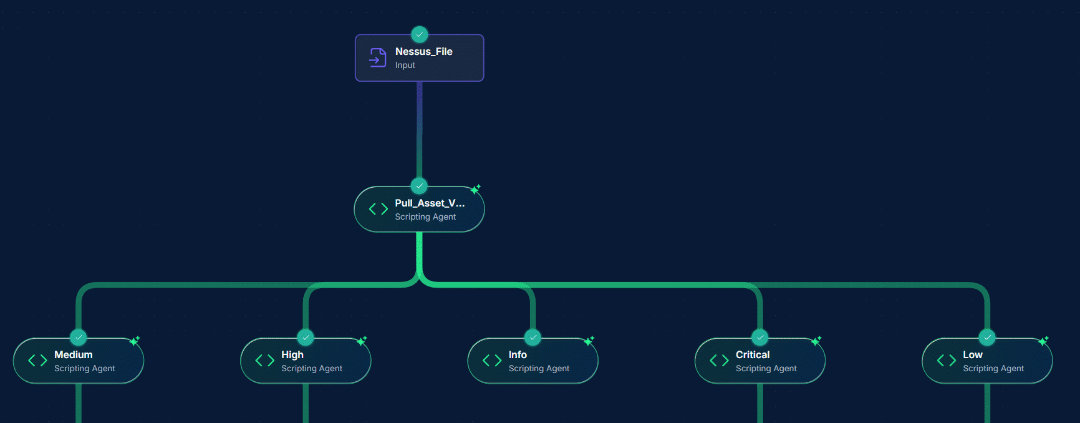
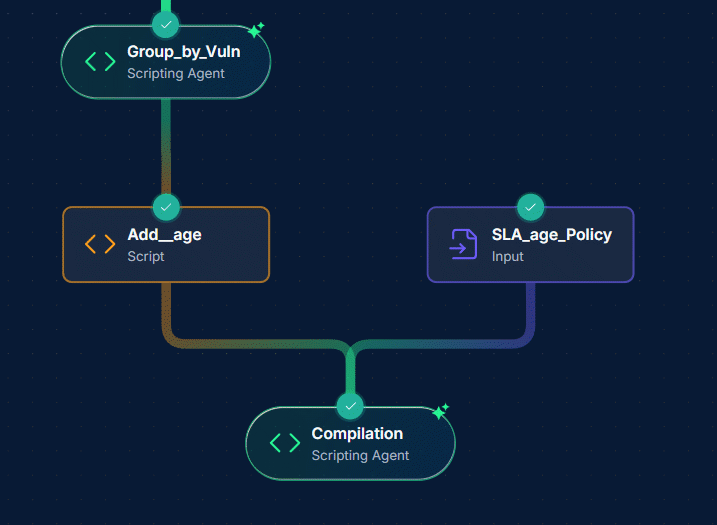
The workflow begins by ingesting a Nessus export and extracting the key fields needed for analysis — asset identifiers, detected vulnerabilities, associated plugin or CVE references, severity ratings, and the first and last observed timestamps. The data is then normalised and grouped so each asset is mapped to its detected vulnerabilities, with findings categorised by severity (low, medium, high, and critical).
From there, the workflow calculates the age of each vulnerability within the environment by comparing the first observed timestamp with the current date. These results are then evaluated against a defined SLA policy that specifies acceptable remediation timelines for each severity level.
The output provides a structured overview of vulnerabilities grouped by severity and age ranges, along with the number of affected assets. This makes it easy to identify vulnerabilities that have exceeded their remediation window — for example, critical vulnerabilities that have existed in the environment for longer than 30 days.
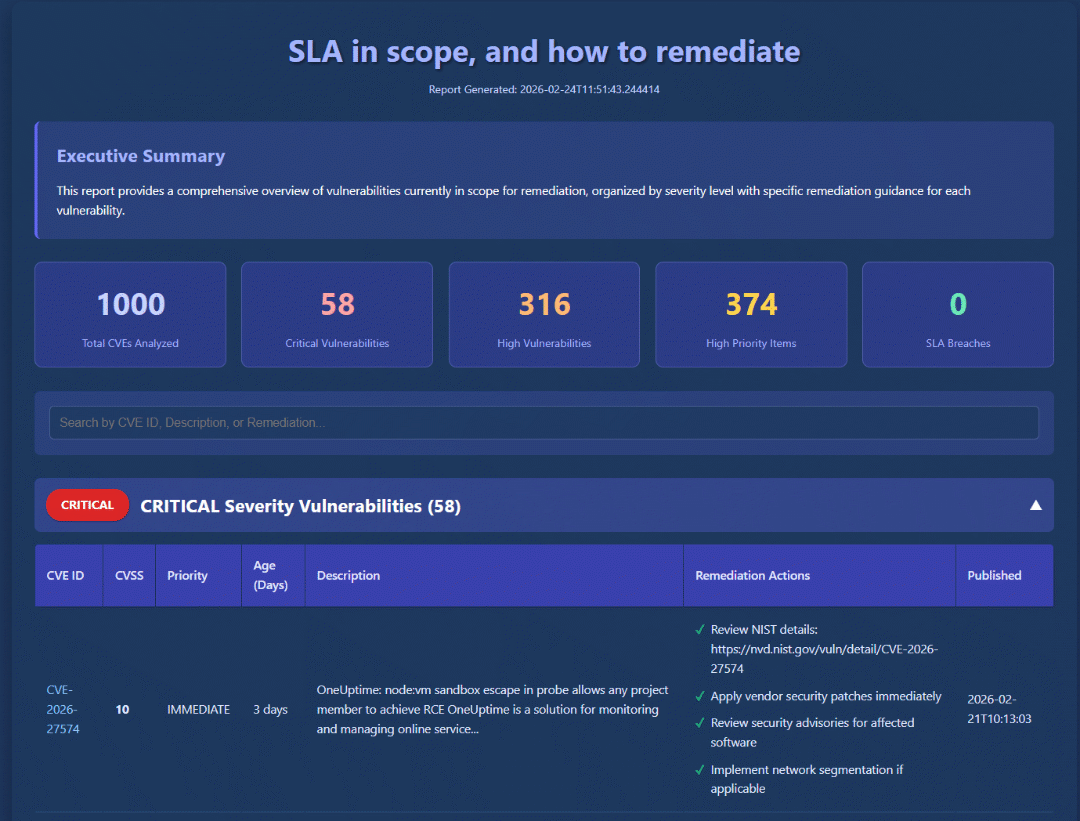
In practice, this type of workflow allows teams to quickly answer questions such as
“Which vulnerabilities are breaching our SLA?”
“Which assets are carrying long-standing high-risk vulnerabilities?”
“Where are we most at risk?”
All without manually parsing vulnerability reports or building custom scripts each time.
If these are questions your business needs to answer, or you have other workflow or automation questions, see how Zynap and AgileSecops can help: email sales@agilesecops.io to organise a quick overview demo or discuss more options.